The Luxembourg Garden from Saint-Germain-des-Prés : a Walking Guide
A walking tour via Saint-Sulpice, must-see stops in the Luxembourg Gardens, and practical information to help you plan a walk starting from Rue des Saints-Pères.
The Luxembourg Garden is within walking distance of Saint-Germain-des-Prés. Starting at the Hôtel Pas de Calais, 59 rue des Saints-Pères, a walk along rue du Four, rue Bonaparte, Saint-Sulpice, and rue Férou leads to rue de Vaugirard. Once there, the large pond, the Medici Fountain, the sculptures, and the plant collections allow you to tailor your visit to your preferences. Admission to the garden is free, with hours that vary throughout the year. This guide offers a tour focused on the Luxembourg Gardens, its gates, and its various areas, so you can choose where to enter, what you’d like to see, and how much time you’d like to spend on your walk.
Reach the garden via Saint-Sulpice
From Rue des Saints-Pères, take Rue du Four toward Rue Bonaparte. Follow Rue Bonaparte south to Place Saint-Sulpice, then head to Rue Férou. It leads to Rue de Vaugirard, along the edge of the Luxembourg Gardens. The Senate lists a “Porte Férou” among the entrances to the garden. This route allows you to combine your walk with a stop in front of the church and the fountain of Saint-Sulpice.
Locate your entrance on the map and review the Senate’s practical information before setting out. If you’d like to stroll on the west side, the Fleurus Gate is another option. Choose your entrance based on your plans: a first look at the palace, a break by the pond, or a stroll along the paths. The duration of the walk depends on your pace and how often you stop in the neighborhood.
Start with the pond and the view of the palace
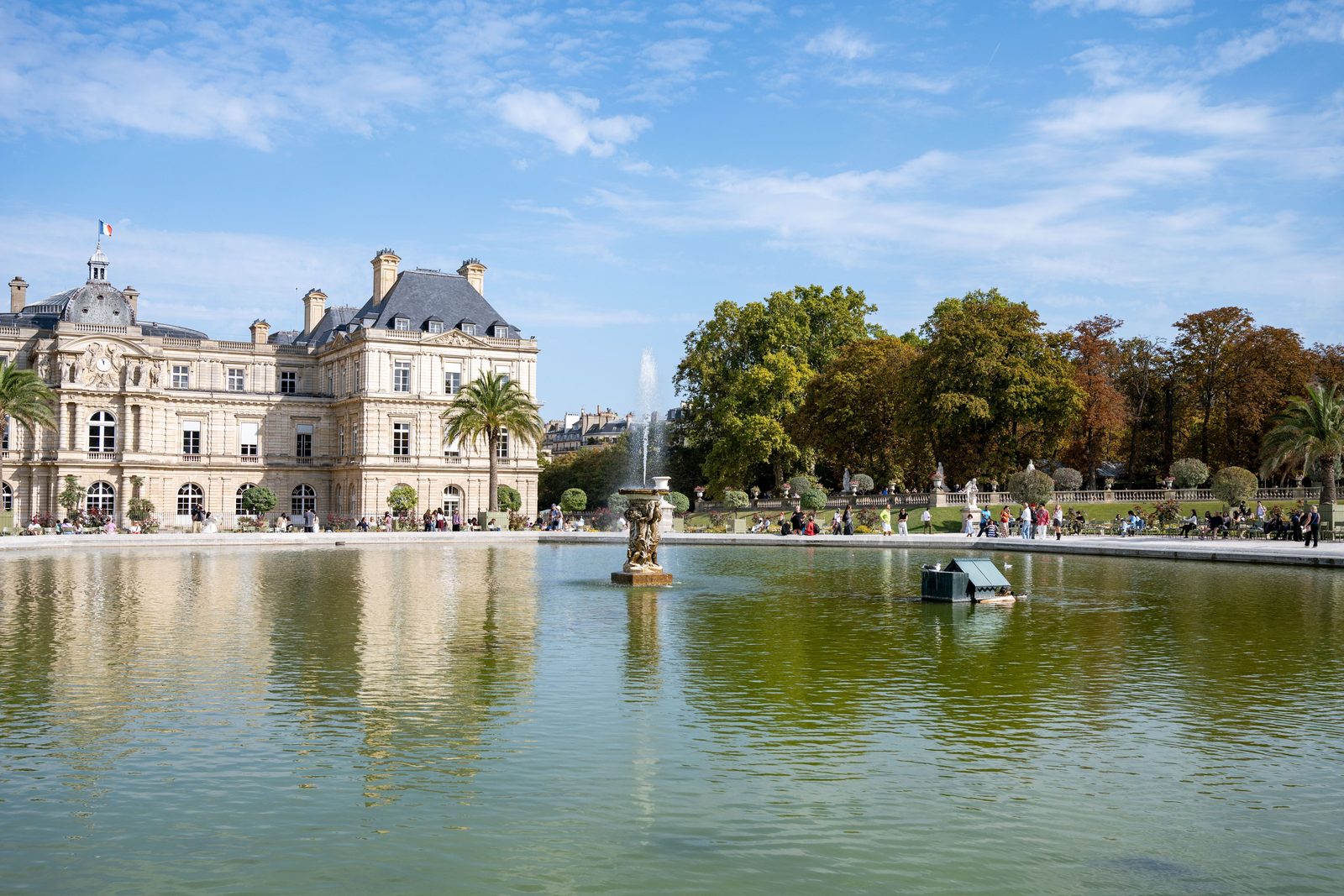
The large pond serves as a simple landmark for orientation. From its banks, take in the palace façade, the terraces, and the layout of the flowerbeds before exploring the side paths. The garden’s design combines French and English-style spaces. According to figures published by the Senate, the grounds cover 25.72 hectares, 21.75 of which are open to the public. You can therefore choose to take a short break or a longer stroll, without feeling the need to walk every path.
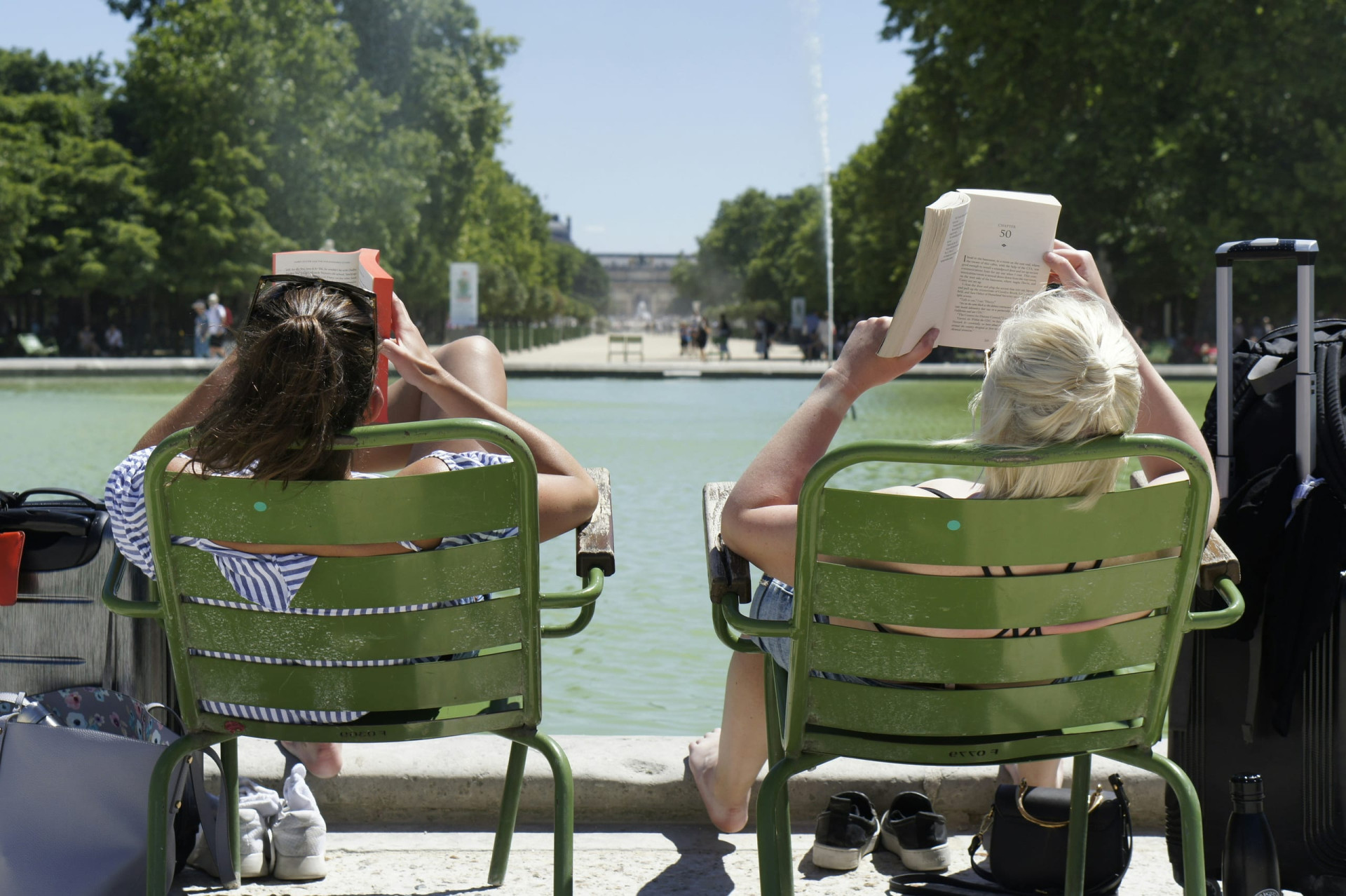
The chairs invite you to take a break between stops. They are free to use. Find an available seat with a book or simply take a moment to enjoy the garden. For a first visit, start with an overview, then choose a specific area. This approach prevents the walk from turning into a relentless search for monuments on a screen.
Take a closer look at the Medici Fountain
In the eastern part of the garden, the Medici Fountain deserves a separate visit. Commissioned by Marie de’ Medici around 1630, it has changed over the centuries. Its relocation in the 19th century was accompanied by the construction of the long basin and the addition of new sculptures. In the central niche, Auguste Ottin’s group depicts Polyphemus surprising Acis and Galatea. Notice the contrast between the bronze Cyclops and the marble figures, then take a closer look at the details around the niche.
The appeal of the site lies as much in its perspective as in the sculptures themselves. Step closer to the fountain, then take a few steps back to view the entire scene. The Senate restored the fountain and its basins in 2020 and 2021. The official presentation of the Medici Fountain provides key historical context to further your exploration after your walk.
Explore the Sculptures and Botanical Heritage
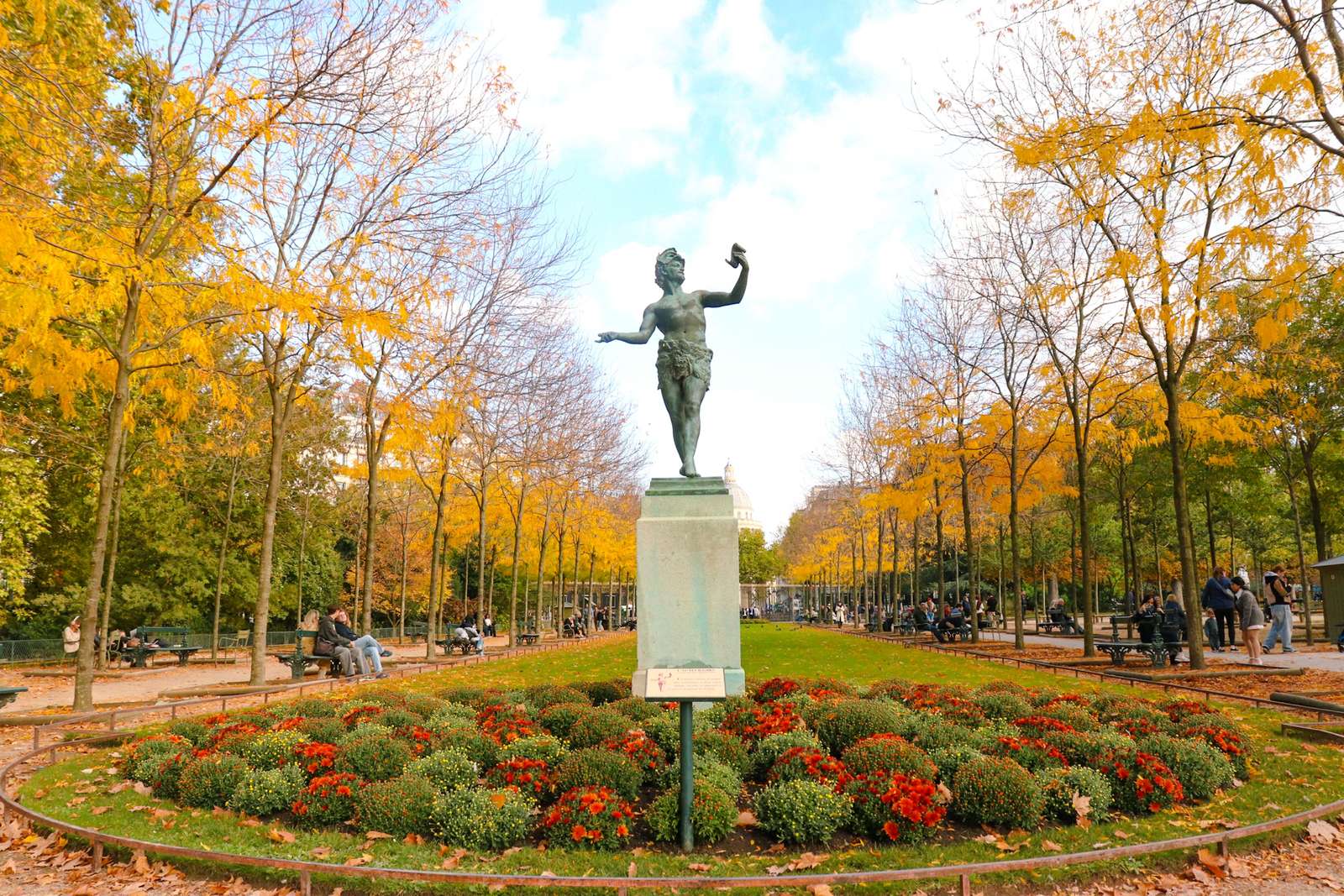
The Senate has identified 102 statues in the garden. Around the terraces and along the paths, the queens of France, notable women, writers, and artists offer several themes to explore. You can choose to take a stroll focusing on a few figures rather than trying to find them all. The sculpture map provided by the Senate helps you locate the works and understand their placement. Also take the time to read the inscriptions on the pedestals.
The horticultural heritage offers another perspective on the Luxembourg Gardens. The heritage orchard features heirloom varieties of pear and apple trees. The Orangery shelters potted plants during the cold season; bitter orange trees are typically on display from May through October near the palace’s south facade. Access to the collections and opportunities for special tours are arranged separately. Their presence in the garden does not mean that all horticultural work areas are open to the public.
Distinguishing Between the Garden, the Palace, and the Museum
The Luxembourg Palace is the seat of the Senate. Free admission to the garden does not grant access to its chambers. The Senate provides information on tour options, particularly during European Heritage Days or as part of group tours organized at the request of senators. For a casual visit, enjoy the view of the façade from the garden without planning an impromptu tour of the interior.
The Musée du Luxembourg is also a separate venue dedicated to temporary exhibitions. Check its schedule and reservation policies if you’d like to include it in your walk. The garden’s Orangerie should not be confused with the Musée de l’Orangerie located in the Tuileries. These distinctions are helpful when planning a cultural day out and booking the right venue.
Planning a Family Visit
If you’re visiting with children, choose a few simple stops: look at the pond, spot a sculpture, then head to an activity suitable for their age. The Senate distinguishes between free activities, such as the sandboxes, and paid attractions, including the sailboats, the playground, the carousel, and the puppet theater. How each activity operates depends on its operator, the schedule, and the conditions on the day.
Before planning a visit, check the event details on the “Luxembourg with the Family” page. Plan an itinerary that remains enjoyable even if a performance isn’t available. The paths and sculptures alone make for a pleasant stroll without needing to make any purchases. Free public restrooms are marked on the garden map. Bicycles and scooters are not allowed inside.
Check the October hours before you go
In October 2026, the official schedule lists opening hours from 7:45 a.m. to 6:45 p.m. from the 1st to the 15th, from 8:00 a.m. to 6:15 p.m. from the 16th to the 24th, and from 8:00 a.m. to 5:15 p.m. from the 25th to the 31st. The change in hours therefore means closing time is earlier at the end of the month. If you’re planning an afternoon stroll, check the schedule before leaving the hotel and allow enough time to make it to your destination.
Check the official opening hours of the Luxembourg Gardens for the date of your visit. To return to Saint-Germain-des-Prés, you can take Rue Férou and Rue Saint-Sulpice or head toward Porte Fleurus to continue your walk toward Rue Madame. Starting from the Hôtel Pas de Calais, this outing lets you spend part of your stay in the garden, with a route you can tailor to your own pace.
Frequently Asked Questions
How do you get to the Luxembourg Gardens from the Hôtel Pas de Calais?
From 59 Rue des Saints-Pères, head to Rue du Four, then Rue Bonaparte toward Saint-Sulpice. Next, take Rue Férou, which leads to Rue de Vaugirard near the garden’s Porte Férou. The duration depends on your pace and how often you stop.
Is admission to the Luxembourg Garden free?
Yes, admission to the garden is free. Some activities, such as sailboat rentals, the playground, or the puppet theater, require a fee. The museum and palace tours are separate from the garden stroll.
What are the opening hours for the Luxembourg Gardens in October 2026?
The Senate’s schedule lists 7:45 a.m. to 6:45 p.m. from October 1 to 15, 8:00 a.m. to 6:15 p.m. from October 16 to 24, and 8:00 a.m. to 5:15 p.m. from October 25 to 31. Check the official hours for the date of your visit.
What should you see on your first visit to the Luxembourg Gardens?
Start with the large pond and the palace façade, then explore the Medici Fountain. From there, the terraces and paths allow you to explore the sculptures and admire the botanical heritage at your own pace.